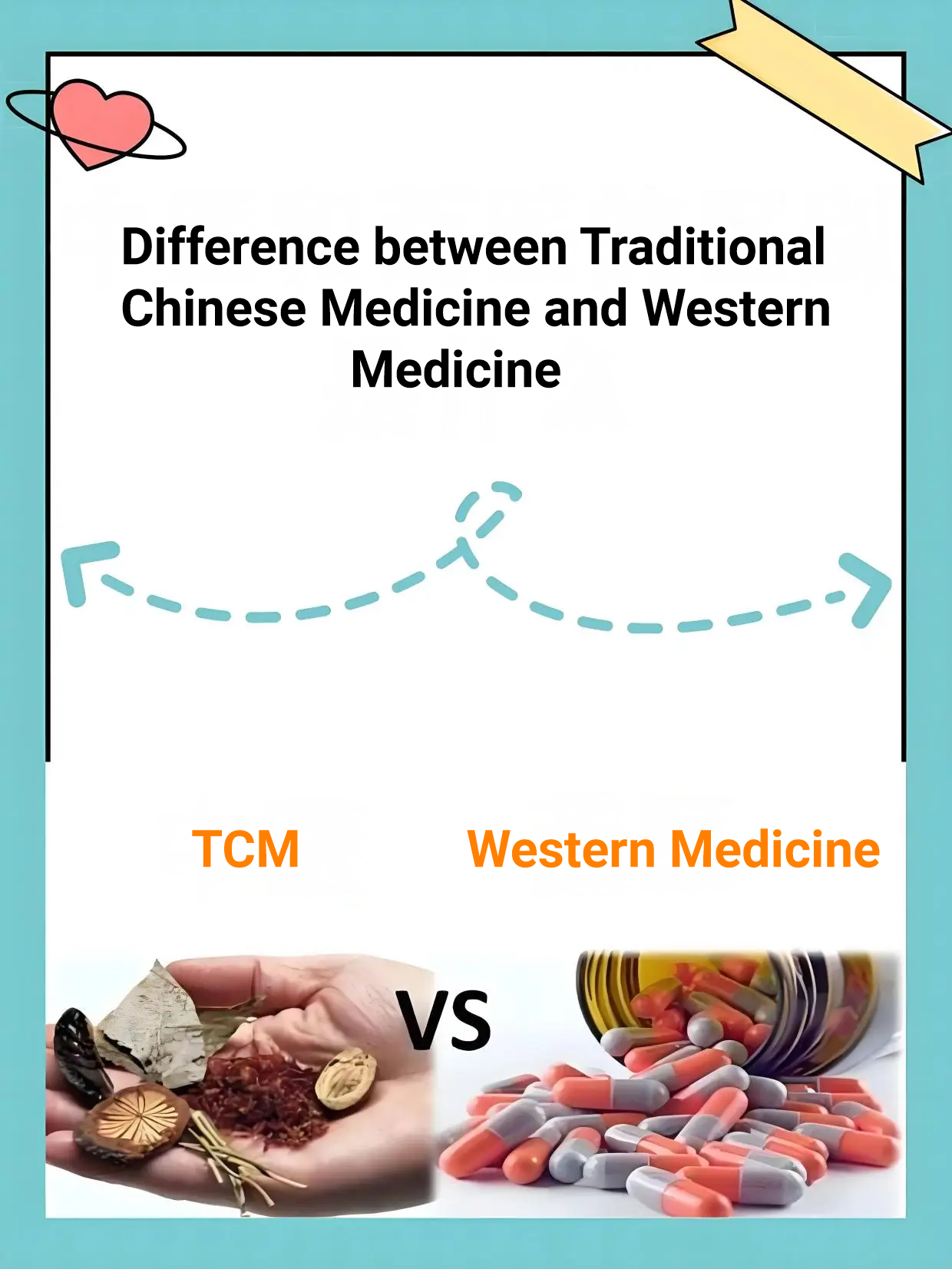
There are essential differences between Western medicine and traditional Chinese medicine in terms of theoretical system, diagnosis and treatment methods, and drug application. The main differences are reflected in five dimensions: theoretical basis, diagnostic methods, treatment methods, drug sources, and disease views.
Theoretical Basis
Western medicine, based on modern sciences such as anatomy and physiology, emphasizes microscopic mechanisms such as pathogens and cellular pathology. Traditional Chinese Medicine, on the other hand, uses the theoretical framework of Yin and Yang, the Five Elements, and Qi, Blood, and Body Fluids, focusing on overall balance and the relationship between the internal organs. Western medicine quantifies disease through laboratory tests, while Traditional Chinese Medicine uses the Four Diagnostic Methods for qualitative analysis.
Diagnostic Methods
Western medicine relies on objective data such as imaging and biochemical tests, such as CT scans and blood counts. Traditional Chinese Medicine uses observation, auscultation, questioning, and palpation to assess subjective symptoms, such as tongue and pulse patterns. Western medicine diagnoses are highly standardized, while Traditional Chinese Medicine diagnoses vary significantly from person to person.
Treatment Methods
Western medicine primarily relies on allopathic treatments such as surgery, chemotherapy, and radiotherapy, such as amoxicillin capsules for treating infections. Traditional Chinese Medicine (TCM) employs modulatory therapies such as herbal remedies, acupuncture, and massage, such as Ma Huang Tang for diaphoresis and relieving symptoms. Western medicine works quickly but may be accompanied by side effects, while TCM works more slowly but focuses on holistic conditioning.
Drug Sources
Western medicines are mostly chemically synthesized or biologically derived, with a single, well-defined ingredient, such as ibuprofen tablets. Traditional Chinese Medicine (TCM) primarily uses natural plant and animal ingredients and is used in combination, such as Liuwei Dihuang Wan. Western medicine has a well-defined target, while TCM works through multiple pathways synergistically.
Perspective on Disease
Western medicine focuses on clearing localized lesions, such as tumor resection; Traditional Chinese Medicine emphasizes strengthening the body’s vital energy and dispelling pathogenic factors, such as tonifying the middle qi and replenishing qi. Western medicine focuses on disease specificity, while Traditional Chinese Medicine emphasizes individual constitutions. Both offer advantages in treating acute and critical illnesses, and managing chronic diseases.
The integration of Traditional Chinese and Western medicine has become a trend in modern medicine. It is recommended to choose the appropriate treatment based on the type of illness: Western medicine should be prioritized for acute and critical illnesses, while Traditional Chinese Medicine can be combined with other approaches to manage chronic diseases. Maintain a regular daily routine and regular sleeping schedule and a balanced diet to avoid over-reliance on a single medical system. Regular physical examinations can help detect health problems early. Special populations, such as pregnant women and children, should strictly follow their doctor’s instructions when taking medication and should avoid mixing Western and Chinese medicines.